Design Thinking: Methodology, Mindset or What?

Chamber musicians perform trio sonata
by Rebecca Cochran
During the past several years, I’ve spent a fair amount of time exploring design thinking. I’ve read inspiring and insightful books and blogs on the subject, heard in-person keynotes by design thinking experts including Claudia Kotchka and Roger Martin, attended a design thinking conference, engaged in numerous online discussions around the topic and have had many face-to-face conversations with others on this often elusive topic.

My still looming question: Is design thinking a methodology, a mindset or something else?

David Kelley, a founder of IDEO and co-founder of the d.school program at Stanford, in a video interview with Reena Jana of Business Week, stated that design thinking can be learned. Design thinking is not a new methodology, according to Kelley, “it used be to be called design.” Companies are finally recognizing the value of design and many are working to make design thinking part of their corporate DNA.

I tend to agree with Kelley in that design thinking can be learned. But, at the same time, I feel that design thinking is a mindset. According to the World English Dictionary, mindset is defined as “the ideas and attitudes with which a person approaches a situation, especially when these are seen as being difficult to alter.” If this is an accurate definition, then I’m convinced that design thinking also falls into mindset mode.

OK, so design thinking is both methodology and mindset. But, which comes first? How does one acquire the design thinking mindset?

In my case, design thinking has been a way of life for as long as I can remember. At the age of 10, I (luckily) embarked on a path towards becoming a serious classical musician. That meant years and years of developing both sides of my brain and, just naturally, blending analytical thinking with intuitive thinking.

Of all the arts, music is the one which best grooms the mind in that hybrid way. During tens of thousands of hours in the practice room, a musician taps into a blended skill set of analysis and intuition. In learning a new piece or re-learning a piece from our past repertoire, we prototype hundreds of times. That prototyping is done alone, with a teacher, in rehearsal and then again during each actual performance of the work. Whether in a chamber music ensemble or in an orchestra, the nimble musician combines what he has analyzed with what he has prototyped and then adds the layer of intuitive thinking so necessary when interacting with other musicians onstage.

So, for some, design thinking seems to come naturally. Design thinking is a blend of years of learning, prototyping and doing.

What are your thoughts? Are there other fields of study that naturally train us in design thinking? I’d like to hear from you.

This post was originally published in March, 2011

The Nimble Manager

Curriculum design for a global business school

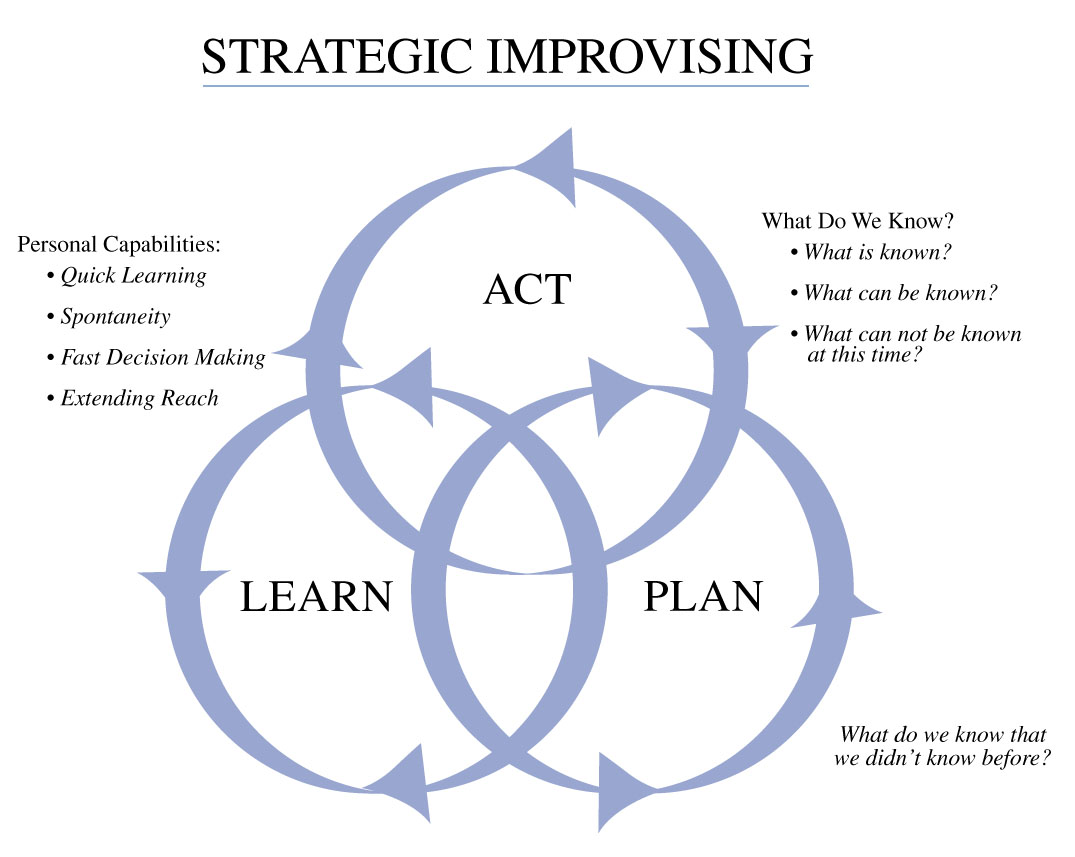
IMDLogoAs part of a team, we produced an action guide on strategic improvisation and nimble management for a course facilitated by a key faculty member at IMD in Lausanne, Switzerland. In this process, we developed a series of illustrations symbolizing key learning concepts and created tools for conducting strategic improvisation assessments.

Illustration


by Rebecca Cochran

Betacup challenge

Prototype. Test. Change Behaviors.

As part of a “Drink Sustainably” design challenge team for Starbucks (via jovoto.com), I first concepted alone, then collaborated virtually with other designers around the world to come up with the “sirena” concept.

Here’s the creative brief:

The concept works in addition to, not instead of, the other great ideas that are already in use or being proposed — from the use of recycled paper cups to encouraging customers to bring in their own mugs to Starbucks.sirena

The idea centers on testing a new concept in the marketplace while gradually working to change the behaviors of coffee-drinkers, especially American coffee-drinkers. Many of us, myself included, don’t think twice about drinking from a paper cup while in the Starbucks stores. Using paper cups has become habitual for both customers and baristas.

But, what if Starbucks tested some “for-here-only” stores?

Starbucks would select a few stores in appropriate market(s) and do some quick prototyping for testing purposes. Prototyping would include a name change from Starbucks to “sirena”, the Latin equivalent of “mermaid.” The pronunciation of the word “sirena” also has a relaxing connotation.

The “sirena” concept will be the same as the Starbucks concept except that “sirena” stores will only serve coffee in porcelain mugs or cups & saucers. Patrons will simply enjoy their coffee in the store or on the patio. Food will be served on plates. There will be no “to go” options at “sirena” locations. Drinks and food will still be served up at the counter by Starbucks baristas. Customers can use small trays to take their selections to nearby tables.

The prototype stores will be current Starbucks stores. Temporary vinyl signage with the “sirena” logo will cover the Starbucks logos indoors and out. Product packaging will continue to bear the Starbucks brand identity.

The “sirena” prototype store concept will be marketed via word-of-mouth and social media. Costs will be contained during the testing phase wherever possible.

The idea is to prototype quickly and test, listen, observe and learn. Upfront analysis will be kept to a minimum. The concept will be allowed to evolve and improve as testing reveals additional information.

It is important to note that the products will not change from the Starbucks stores to the “sirena” concept stores. The “sirena” brand would be a line extension associated with the in-store experience only.

The goal of the “sirena” concept is to gradually reshape coffee-drinking behavior. This test may reveal that coffee drinkers more readily embrace the “sirena” store concept in the afternoon or evening and/or on weekends. The “sirena” store could become a place to meet friends, relax and unwind after working hours. As more and more of us embrace the concept over time, additional Starbucks locations would convert to the new concept. There will continue to be a major place for the original Starbucks concept in the marketplace.

Paper cup consumption will go down with the “sirena” model. In the process, we may learn to slow down a bit and more readily engage with our fellow human beings. © All rights reserved.

Although our concept did not win an award, the entire experience sharpened our collaboration and teaming skills.

by Rebecca Cochran