Can Snow Days Boost Our Creative Capacity?

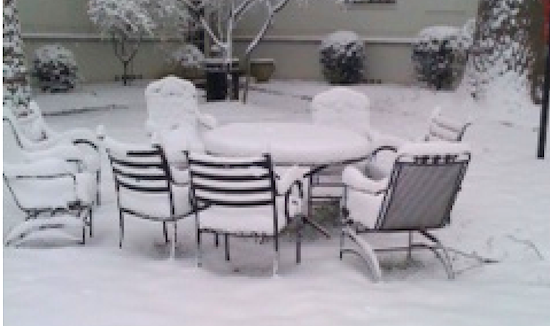
SnowDayThanks to this year’s unusually disruptive winter weather, we’ve probably all experienced a few days in which our daily routines have been disrupted, as well. If you’re like me, your first reaction to these disruptions is probably negative. This year, however, I decided to rise above that negativity and turn each disruption into an opportunity.

When my first “snow day” of the year appeared, I decided to take the upper hand and proactively change my daily routine. Instead of heading out to my local Starbucks for coffee first thing, I decided to stay off the icy roads and enjoy a cup of tea at home. And, rather than quickly jumping online, I sat at my kitchen table and began mentally mapping out my workday. This led to my grabbing a sketch pad and marker and drawing a “mind map” to help me think through a new client project.

It had been awhile since I had begun a new project offline. With all of our digital tools so close at hand, it can be easy to forget the power of even a crude hand sketch to sort out a process. I ended up sharing my sketches with my client and I think that helped him better visualize our process, as well.

On another snow day, when all of my meetings were cancelled or rescheduled, I decided to flip my routine. Instead of saving my work-related reading for late in the evening, I began that morning with a reading session. Not only were my eyes fresher, but I was also able to apply several fresh, new ideas to my design work immediately that morning. This new routine made me wonder how many fresh, new ideas I “sleep on” and promptly forget following a late night reading session.

These little changes in the workday routine pointed out how valuable it can be to change things up more often. Rather than arbitrarily sticking to a set routine five days a week, we should allow disruption in more often. It just may boost our creative capacity and help us come at a problem from a new perspective.

What do you think?

by Rebecca Cochran

Whatever Happened to Creative Homage?

One evening last week, while tuning in to American Public Media’s Performance Today show, I happened to catch Luigi Boccherini’s Symphony in d minor, Op. 12 No. 4, nicknamed La Casa Del Diavolo or The House of the Devil. As a flutist, of course, I’m familiar with Boccherini’s great output including his Flute Concerto in D, his trio sonatas with flute and his numerous flute quartets and quintets. I admire his cello concerti and guitar quintets — the Fandango comes happily to mind.

However, upon my first-ever hearing of La Casa Del Diavolo last week, I was truly incensed. It wasn’t the ominous name that bothered me, but the outright plagiarism of the allegro finale. It was obvious to me that Boccherini had stolen it, practically note-for-note, from Gluck’s opera, Orpheus and Eurydice. Now, Gluck is downright monumental among us flutists, having composed one of the most sublimely beautiful flute solos ever written in his opera scene, Dance of the Blessed Spirits. He precedes that blissful flute solo with pure chaos via his Dance of the Furies, making the flute solo that follows even more sublime.

So, I got online and did some research. I discovered that in Gluck’s and Boccherini’s time (the mid-to-late 18th century), imitation was common practice. The act of plagiarism was considered a sign of respect and, in fact, a way to pay creative homage to an artist one admired or looked up to.

Who knew?

I wonder when these sentiments changed. Just now, I conducted a search on the words “intellectual property.” Google instantly returned 1.8 million results. Perhaps we’ve gone too far in protecting each and every one of our thoughts, theories, ideas and inventions. Perhaps we’d all be more creative and productive if we weren’t so protective — if we freely shared and reused each others’ ideas as a matter of course.

What do you think?

by Rebecca Cochran

My Top 3 Creative Re-Reads of 2013

By Rebecca Cochran

Blue pencil and red lineLike you, I did a lot of reading this year. Contrary to what I might have predicted, the internet has played a major role in keeping my bookshelf full of interesting books – physical books I actually read – and re-read. For me, one of the marks of a good book is that I want to re-read it, sometimes again and again. It was tough to whittle down the list, but here are my top 3 creative re-reads of 2013.

Creative Confidence by Tom and David Kelley

Just published in October, Creative Confidence sets out to “unleash the creative potential within us all.” This highly personal book does just that. The chapter entitled “Spark” particularly resonates with me. The Kelley brothers write about the importance of building a creative support network, since many of the best ideas are a result of collaborating with others. They also advocate cultivating creative serendipity, i.e., getting out into the world to gain empathy with our customers. In the chapter entitled “Leap,” the Kelleys describe the all-important phase of moving from planning to action. They include “action catalysts” and other useful tools, encouraging us to conduct small experiments to let an idea evolve. Some of the craziest ideas can lead to a valuable solution. This book is for all of us. I am reading it again already.

It’s Not How Good You Are, It’s How Good You Want to Be. by Paul Arden

I read this book at least once a year. Originally published in 2003, it has been reprinted many times since. The book is about making the most of yourself and making the impossible possible. A former ad man, Arden uses the creative processes of good advertising as a metaphor for business practice. The book is chock full of memorable quotes. One of my favorites is “You don’t have to be creative to be creative.”

Harold and the Purple Crayon, by Crockett Johnson

A new friend handed me the 50th anniversary edition of this well-known children’s book last month. Originally published in 1955, I cannot fathom how many times I read and re-read this book as a kid. This classic is worth re-reading as adults, too. In his minimalist way, Harold has reminded me to stay curious. I plan to keep his little book handy and re-read it whenever I need a creative boost.

What are you re-reading?