A Personal Experiment

by Rebecca Cochran

As 2016 emerges, rather than setting resolutions, I’ve embarked upon a personal experiment. I’m calling it My Year of Bach.

This particular experiment is very near and dear to my heart. As a flutist, for as long as I can remember, Johann Sebastian Bach has been my favorite composer. I’ve written about Bach several times here in this space.

My experiment, or challenge, was partially inspired by Austin Kleon, a writer who draws. I heard Austin speak at the Hopscotch Design Festival in Raleigh last summer. I’ve since read his books, Steal Like An Artist and Show Your Work! His suggestions to “share something small every day,” “send out a daily dispatch” and “share like an artist” immediately resonated with me.

With My Year of Bach, I haven’t set too many rules for myself. Like I said, this is an experiment, and I think we all need to experiment more.

My goals for this experiment are:

  • Post daily
  • Learn as I go
  • Share what I learn
  • Enjoy myself

So, here goes!

Walking Backwards

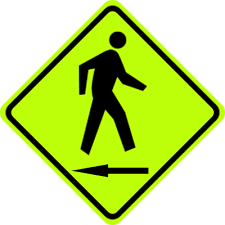
BackwardsDid you ever try walking backwards? I did the other day. Well, not actually walking backwards…

I take a walk daily. I’ve been doing so since I was a little girl. It feels so good, so natural and it’s such a simple way to exercise my body and my mind.

The other day, on a whim, I decided to start at the end of my usual route and walk from there to where I usually begin my walk. I know…that wasn’t exactly rocket science, but it was interesting to take in everything in reverse, to see the “backs” of things: trees, buildings, signs, everything.

As I “reverse-walked,” I couldn’t help but see things differently. I spied a hidden garden that I’d never noticed before. I saw sunlight glistening on a building, giving it a dazzling glow that I’d been missing all those years I’d been approaching from the opposite direction. And, I couldn’t help thinking that I should walk backwards more often, literally and figuratively.

What might I be missing each time I start a project at “the beginning”? Could I achieve a better result if I started somewhere in “the middle” or, even, at “the end”?

Could I be a better problem solver if I consciously worked backwards? By clearly defining what the end result should be, could I reverse-engineer the steps needed to reach that goal?

Certainly, as a musician, I recall teachers suggesting that the best way to learn a piece of music is to “learn it backwards.” In other words, start from the final measure, then append and learn a few prior measures, little by little, until you find your way back to the beginning. This works particularly well when memorizing anything.

Might I be more creative if I consciously “work backwards” more often? It’s incredibly easy to fall into the habit of sticking to a system, especially when that system has been working well for a long time. If I reverse my creative process, might my results be, dare I say it, more creative?

The simple exercise of taking my walk from “back to front” has reminded me that there is more than one way to approach a problem, reach a goal or generate a new idea.

I need to practice walking backwards more often.

What analogies can you add to this list?

by Rebecca Cochran

Can Snow Days Boost Our Creative Capacity?

SnowDayThanks to this year’s unusually disruptive winter weather, we’ve probably all experienced a few days in which our daily routines have been disrupted, as well. If you’re like me, your first reaction to these disruptions is probably negative. This year, however, I decided to rise above that negativity and turn each disruption into an opportunity.

When my first “snow day” of the year appeared, I decided to take the upper hand and proactively change my daily routine. Instead of heading out to my local Starbucks for coffee first thing, I decided to stay off the icy roads and enjoy a cup of tea at home. And, rather than quickly jumping online, I sat at my kitchen table and began mentally mapping out my workday. This led to my grabbing a sketch pad and marker and drawing a “mind map” to help me think through a new client project.

It had been awhile since I had begun a new project offline. With all of our digital tools so close at hand, it can be easy to forget the power of even a crude hand sketch to sort out a process. I ended up sharing my sketches with my client and I think that helped him better visualize our process, as well.

On another snow day, when all of my meetings were cancelled or rescheduled, I decided to flip my routine. Instead of saving my work-related reading for late in the evening, I began that morning with a reading session. Not only were my eyes fresher, but I was also able to apply several fresh, new ideas to my design work immediately that morning. This new routine made me wonder how many fresh, new ideas I “sleep on” and promptly forget following a late night reading session.

These little changes in the workday routine pointed out how valuable it can be to change things up more often. Rather than arbitrarily sticking to a set routine five days a week, we should allow disruption in more often. It just may boost our creative capacity and help us come at a problem from a new perspective.

What do you think?

by Rebecca Cochran