What’s So Great About “Great?”


selective photo of gray shark

Photo by GEORGE DESIPRIS on Pexels.com

Yep, that’s right. “Great” is overrated.

For quite awhile, I have been thinking about the possibility of eliminating the word “great” from my vocabulary.

Is “great” a noun? An adjective? An adverb? Or, most likely, all three? What makes it so great to use “great” in a sentence? What is the meaning of “great?”

I always took “great” to mean “large,” as in the phrase, “something greater than myself.” Or, to use examples from the animal world, “great white shark” or “great horned owl.”

Another bothersome point for me is that “great” can refer to things both wonderful, like great art — and devastating, like great destruction during wars or storms.

And, I’m confused why so many of us (myself included) answer “Great!” when asked, “How was your weekend?” Does that one-word response really mean “large?”

It’s almost as if “great” has become an easy catch-all, something we use when we’re too lazy or uncreative to use a descriptive, attention-grabbing word — whether we’re speaking or writing.

What if, instead, when asked by a friend or colleague, “How was your weekend?”, I answered, “Delicious — A friend and I tested several new French recipes on Saturday night and we can’t wait to try more!” Or, “Mind-numbing — I spent the entire weekend working on my tax return!”

And, what if I worked to delete “great,” as an adjective, from my vocabulary?

I might challenge myself to be more descriptive in these instances, as well. Rather than saying, “That was a great concert last night,” I could replace “great” with a more thought-provoking adjective: “That was an emotional concert last evening, don’t you think?” Perhaps this change would open up a real conversation about emotions and feelings around the music for both myself and my concert-mate.

What’s your take on “great? I’m thinking “great” might not be so great any more.
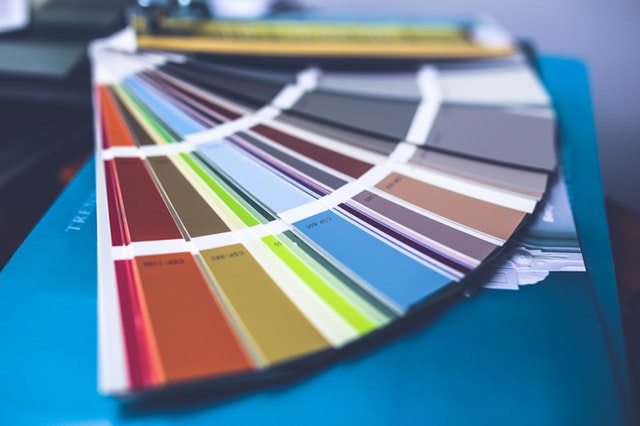
Is Gray a Color?

Color

Having just read Meghan Flaherty’s eloquent piece, Ode to Gray in the Paris Review, I’ve been thinking about color again. Flaherty makes numerous points in favor of gray. She refers to gray as “the color, rather than the sound, of silence.”

Flaherty cites numerous others’ disparate thoughts on gray. She refers to a color psychology article, stating that “grey is emotionless.” She quotes the French painter, Jean-Auguste-Dominique Ingres who said, “Better gray than garishness.” And, she shares, “Paul Klee called it the richest color, “the one that makes all the others speak.”

She also writes that, “according to Eva Heller, in her Die wahre Geschichte von allen Farben, only 1 percent of people surveyed named gray as their favorite color.” Contrast that with blue. Supposedly, half the people on earth list blue as their favorite color.

In one of my earlier posts entitled, The Lure of BlueI wrote about what draws my eye towards blue. Truth be told, nearly every article of clothing I own is blue. My office walls are blue. My automobile is blue.

Hmm…maybe I’ve been taking the easy way out all this time…

After reading Flaherty’s excellent article, I vow to seriously think through the possibility of gray being an actual color. I may even introduce a few bits of gray into my wardrobe because, after all, gray pairs so well with blue…

by Rebecca Cochran

Day 121

by Rebecca Cochran

Bach logo

At the beginning of 2016, I began a personal experiment. I call it My Year of Bach. As a flutist, for as long as I can remember, Johann Sebastian Bach has been my favorite composer. I’ve written about Bach several times here in this space.

I decided to challenge myself by writing a short daily post on some aspect of Bach and his music. Otherwise, I didn’t set too many more rules. Like I said, this is an experiment, and I think we all need to experiment more.

My original goals were these:

  • Post daily
  • Learn as I go
  • Share what I learn
  • Enjoy myself

Now, 4 months in, I can report that I’ve achieved my original goals and more! I have posted daily, mostly “living in the moment,” rather than writing and scheduling posts ahead of time. This approach challenges me to be more observant, remaining on “high alert” for anything even remotely related to Bach that crosses my path each day. I’m conducting quick research, online and off. I’m asking more questions. I’m starting conversations with strangers. I’m listening more intently and attending more concerts and recitals. What I discover today will probably end up in tomorrow’s post. Bach is everywhere.

I’m learning to write more quickly. And, more importantly, I’m learning to trust what I write, rather than second-guessing myself. (There’s no time for that!)

I’m maintaining focus. Rather than going down rabbit holes in search of photos to accompany my posts, I’m staying focused on my writing.

I’m learning a great deal about my favorite composer. Every day, I seem to have yet another “aha moment” about some aspect of JSB. The more I learn about Bach, the more I want to learn.

In sharing my daily posts via Twitter, I am making new friends all over the world. I’m receiving wonderful comments (“Thank you, your latest post has helped me finish my term paper!”), great questions (“How do you recommend I start building a Bach listening library?”) and words of encouragement (“Wow! Keep up the good work; I know you can make it to Day 366!”).

Most importantly of all, I’m having fun!